
If you've ever wondered who's looking after your child at nursery and what they actually do all day, you're not alone. Early years practitioners are the backbone of quality childcare, but their role is often misunderstood. Let's break down what they do, what qualifications they need, and why they're so important for your child's development.
If you've ever wondered who's looking after your child at nursery and what they actually do all day, you're not alone. Early years practitioners are the backbone of quality childcare, but their role is often misunderstood. Let's break down what they do, what qualifications they need, and why they're so important for your child's development.
The Simple Definition
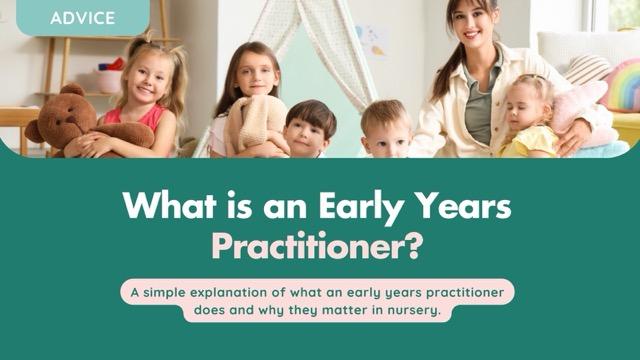
An early years practitioner is a trained professional who works with children aged from birth to five years old. They're sometimes called nursery nurses or early years educators, and they work in nurseries, preschools, and other childcare settings across the UK.
Their job is to support your child's physical, emotional, social, and educational development during these crucial early years. They're not just babysitters. They're trained professionals who understand child development, create learning opportunities, and help lay the foundation for your child's lifelong learning.
In England, this role is formally defined within the Early Years Foundation Stage (EYFS) statutory framework published by the Department for Education. In Scotland early years practitioners work within the Curriculum of Excellence, and in Wales it’s the Welsh Government’s Foundation Phase.

What Do Early Years Practitioners Actually Do?
Day-to-Day Care
A big part of the role involves looking after your child's physical needs. This includes feeding, nappy changing, toilet training, and helping with personal hygiene. It might not sound glamorous, but it's essential work that requires patience, care, and attention to detail.
Early years practitioners are also responsible for keeping children safe and healthy. They follow health and safety procedures, administer first aid when needed, and report any concerns about a child's wellbeing.
Creating Learning Opportunities
Early years practitioners plan and run educational activities that support your child's development. This might include storytelling, singing, arts and crafts, outdoor play, sensory activities, and imaginative play. These aren't just for fun (though they are fun). They're carefully planned to help children develop language, motor skills, problem-solving abilities, and social skills.
They follow the Early Years Foundation Stage (EYFS) in England, the Curriculum for Excellence in Scotland, or the Foundation Phase in Wales. These frameworks set out the learning goals and development areas that practitioners should support.
Observing and Recording Progress
Early years practitioners spend time observing each child and recording their progress. They notice what children are interested in, what skills they're developing, and any areas where they might need extra support. They share these observations with parents and other staff members to build a complete picture of each child's development.
This information is used to plan activities that match each child's interests and needs, and to identify if a child might benefit from additional support or specialist services.
Building Relationships
One of the most important aspects of the role is building strong relationships with children. Early years practitioners are warm, responsive, and emotionally available. They comfort children when they're upset, celebrate their achievements, and help them feel safe and secure.
Many nurseries use a key person system, where each child has one main staff member who they build a close relationship with. This key person is usually the first point of contact for parents and plays a crucial role in helping children settle and thrive.
Communicating with Parents
Early years practitioners keep parents informed about their child's day. They might share photos, send messages through an app, or have a chat at pick-up time. They discuss any concerns, celebrate milestones, and work with parents to support their child's development at home and at nursery.
%20Medium.jpeg)
Qualifications and Training
To work as an early years practitioner in the UK, you typically need a Level 2 or Level 3 qualification in childcare and education (or an equivalent early years qualification). These qualifications cover child development, safeguarding, health and safety, and how to support learning and development.
Some practitioners have a Level 3 qualification, which is more advanced and often leads to supervisory or management roles. Others might have a degree in early childhood education or a related field.
Beyond formal qualifications, early years practitioners need to have completed safeguarding training, first aid training, and often additional training in areas like behaviour management or supporting children with special needs.
It’s worth noting that some entry-level roles allow staff to work towards qualifications while gaining experience Some nurseries will take on staff with relevant experience (like babysitting or childminding) and provide on-the-job training. However, to progress in the role, you'll eventually need to gain formal qualifications.
Early Years Practitioners vs Teachers
People often ask whether early years practitioners are the same as teachers. The answer is no, though they're both important professionals in the education sector.
The Key Differences
Qualifications: Teachers need a Qualified Teacher Status (QTS), which requires a degree and teacher training. Early years practitioners need a Level 2 or Level 3 childcare qualification. These are different pathways with different requirements.
Age Group: Teachers typically work with children aged 5 and above in primary and secondary schools. Early years practitioners work with children from birth to five. These are very different developmental stages requiring different approaches.
Approach to Learning: Teachers follow a school curriculum focused on subjects like English, maths, and science. Early years practitioners follow the Early Years Foundation Stage (or equivalent) and use play-based learning to support holistic development across all areas.
Responsibilities: Teachers focus primarily on academic learning and classroom management. Early years practitioners have a broader role that includes personal care, emotional support, and holistic development alongside learning.
Environment: Teachers work in schools with structured timetables and classrooms. Early years practitioners work in nurseries with flexible routines and learning environments designed for young children.
Why Both Are Important
Both teachers and early years practitioners are vital. Early years practitioners lay the foundation for learning through play, relationships, and holistic development. Teachers build on that foundation with more structured academic learning. They're different roles, but they work together to support children's development from birth through school and beyond.
Early Years Frameworks Across the UK
Early years practitioners across the UK follow nationally recognised frameworks that guide how young children learn and develop. While the names and structures differ slightly by country, they all share the same core aim: supporting children’s development through play, relationships, and responsive care.
England: Early Years Foundation Stage (EYFS)
In England, early years practitioners follow the Early Years Foundation Stage (EYFS), which sets out learning and development expectations for children from birth to five. The EYFS focuses on seven key areas of learning (Communication and Language; Physical Development; Personal, Social and Emotional Development; Literacy; Mathematics; Understanding the World; Expressive Arts and Design).
In England, practitioners also carry out formal developmental checks, including the two-year-old progress check, and contribute to assessments that support school readiness and the transition into Reception.
Scotland and Wales Early Years Frameworks
In Scotland, early years practitioners work within the Curriculum for Excellence during the Early Learning and Childcare (ELC) phase. This framework places strong emphasis on play-based learning, wellbeing, and holistic development, supporting children from birth until they start primary school.
In Wales, practitioners follow the Foundation Phase, a play-led curriculum that focuses on children’s wellbeing, experiential learning, and developmental progress in the early years.
While the terminology and structure differ, all three frameworks encourage practitioners to observe children closely, plan activities around their interests, and support development across physical, emotional, social, and cognitive areas. The goal is the same everywhere: helping children build strong foundations for learning, confidence, and wellbeing as they grow.
Why Quality Early Years Practitioners Matter
Research shows that quality early years education has a significant impact on children's long-term outcomes. Children who attend high-quality nurseries with well-trained practitioners are more likely to do well at school, have better social skills, and have better health and wellbeing outcomes.
This is why it's so important to choose a nursery with experienced, qualified staff. When you're looking for a nursery, ask about staff qualifications, staff-to-child ratios, and how staff are trained and supported.
Finding Quality Early Years Practitioners
When you're choosing a nursery for your child, it's worth asking questions about the staff:
- What qualifications do they have?
- How long have they been working in early years?
- What training do they receive?
- How do they support children with different needs?
- What's their approach to discipline and behaviour management?
- How do they communicate with parents?
A good nursery will be transparent about their staff and happy to answer these questions. You should feel confident that your child is in the hands of trained, experienced professionals who genuinely care about their development and wellbeing.
Using Nuuri to Find Quality Nurseries
When you're searching for a nursery, use Nuuri to find settings in your area and read reviews from other parents. Parent reviews give you real insights into the quality of staff, the learning environment, and how well children settle. You can also check inspection ratings and read the full inspection reports to understand what inspectors found about the nursery's staff and practice.
Find a nursery
Search by location or nursery name
Search for the best nurseries near you with Nuuri.
Frequently Asked Questions
To work as an early years practitioner, you typically need a Level 2 or Level 3 qualification in childcare and education. However, you can work as an early years assistant without formal qualifications if you have relevant experience. To progress in the role, you'll need to gain formal qualifications.
These terms are often used interchangeably. A nursery nurse is typically someone who works in a nursery setting, while an early years practitioner is a broader term for anyone working in early years education. Some nursery nurses specialise in working with babies, while others work with older children.
Staff-to-child ratios are set by law and vary depending on the age of the children. For babies under two, the ratio is typically 1 adult to 3 children. For children aged 2-3, it's 1 adult to 4 children. For children aged 3+, it's 1 adult to 8 children. These ratios can vary slightly depending on the setting and local regulations. These ratios apply in England and may differ slightly in Scotland and Wales.
Look for signs like warm interactions between staff and children, staff who know individual children well, a clean and stimulating environment, and good communication with parents. Read reviews on Nuuri, check inspection ratings, and trust your instincts when you visit.